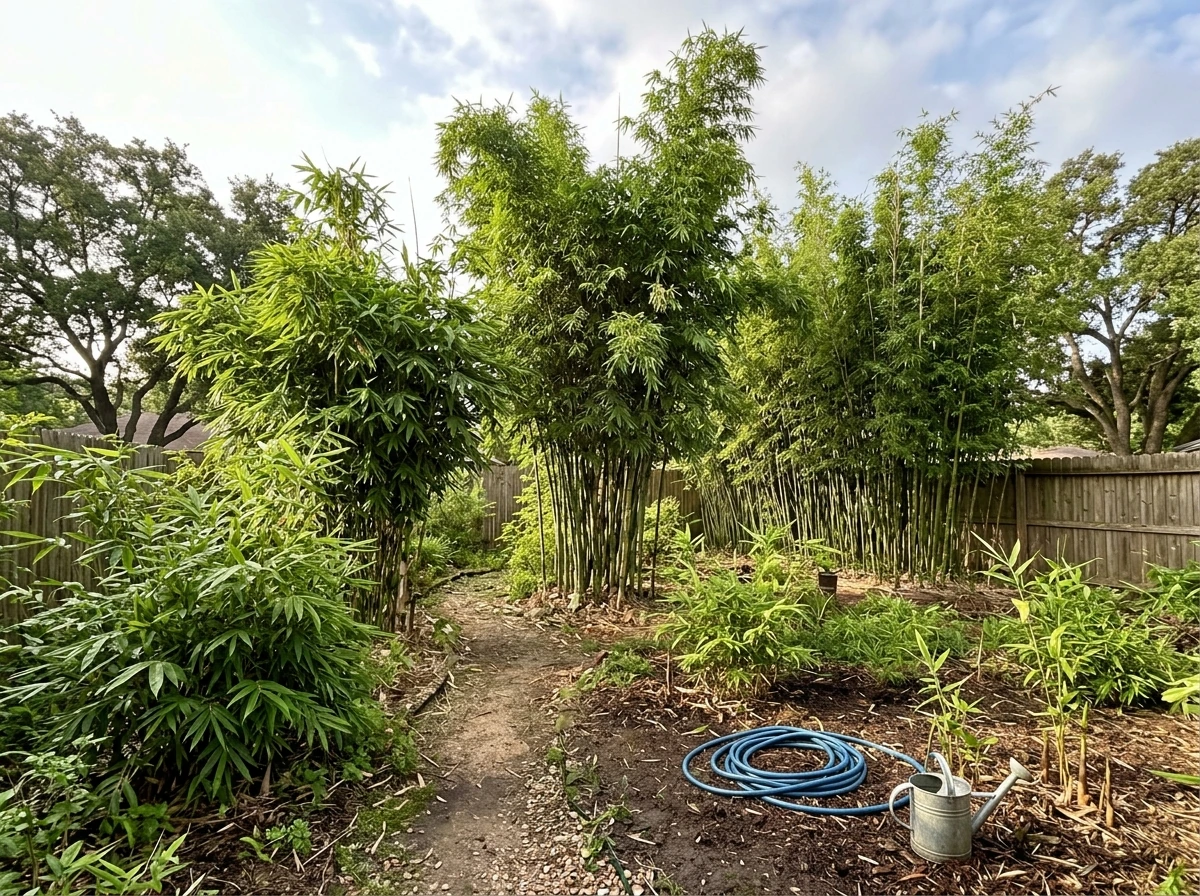
In Florida's warm, humid climate, bamboo grows faster than almost anywhere else in the continental United States. A well-established clumping bamboo in central or south Florida can push up new culms that gain a foot or more per day during their active shooting period in spring and early summer. That said, 'fast' looks very different in month one versus month six, and the species you choose matters enormously. Here's what you can realistically expect, broken down by timeline, species, and what you're doing (or not doing) to help it along. does bamboo grow quickly. how fast does black bamboo grow. how fast does bamboo grow in texas
How Fast Does Bamboo Grow in Florida? Growth Rates by Species
Marcus Hartwell
24 Mar 2026
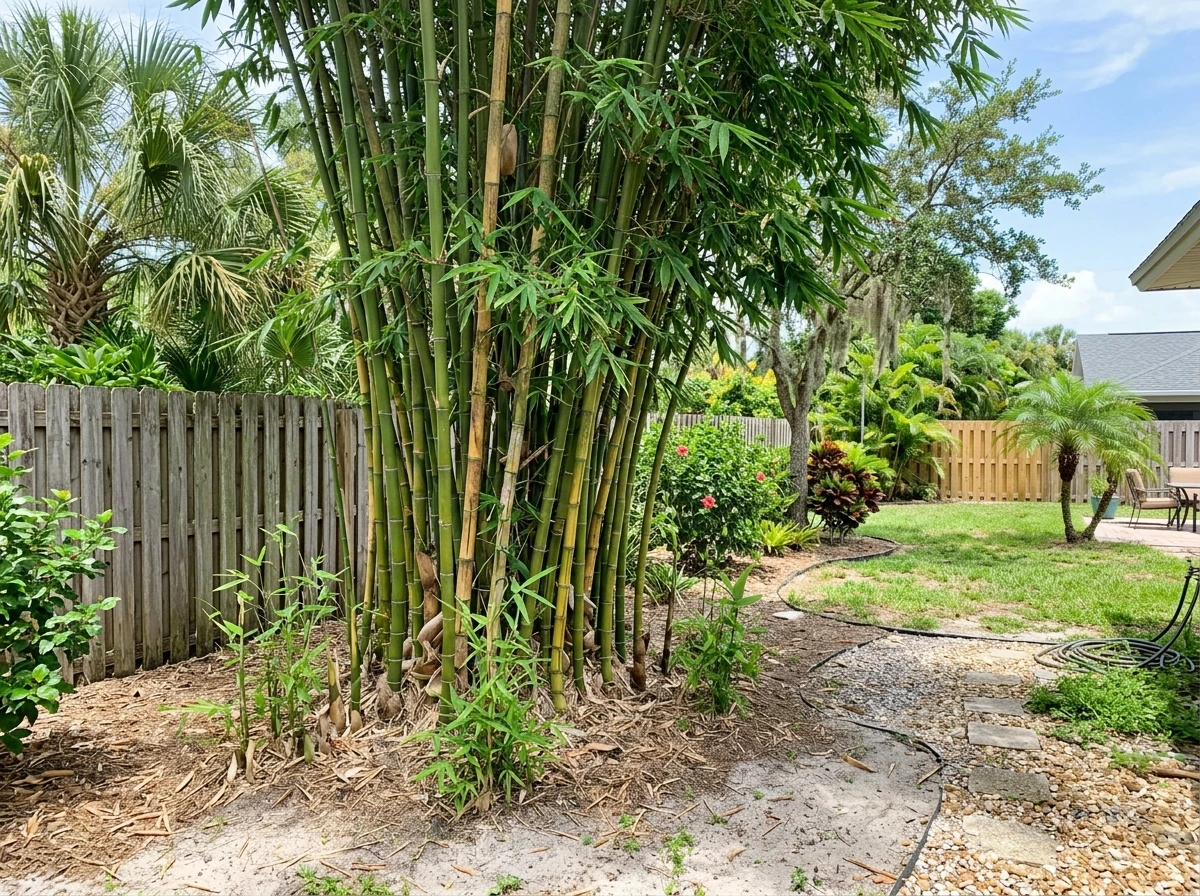
Florida's climate is basically a bamboo paradise (with some caveats)
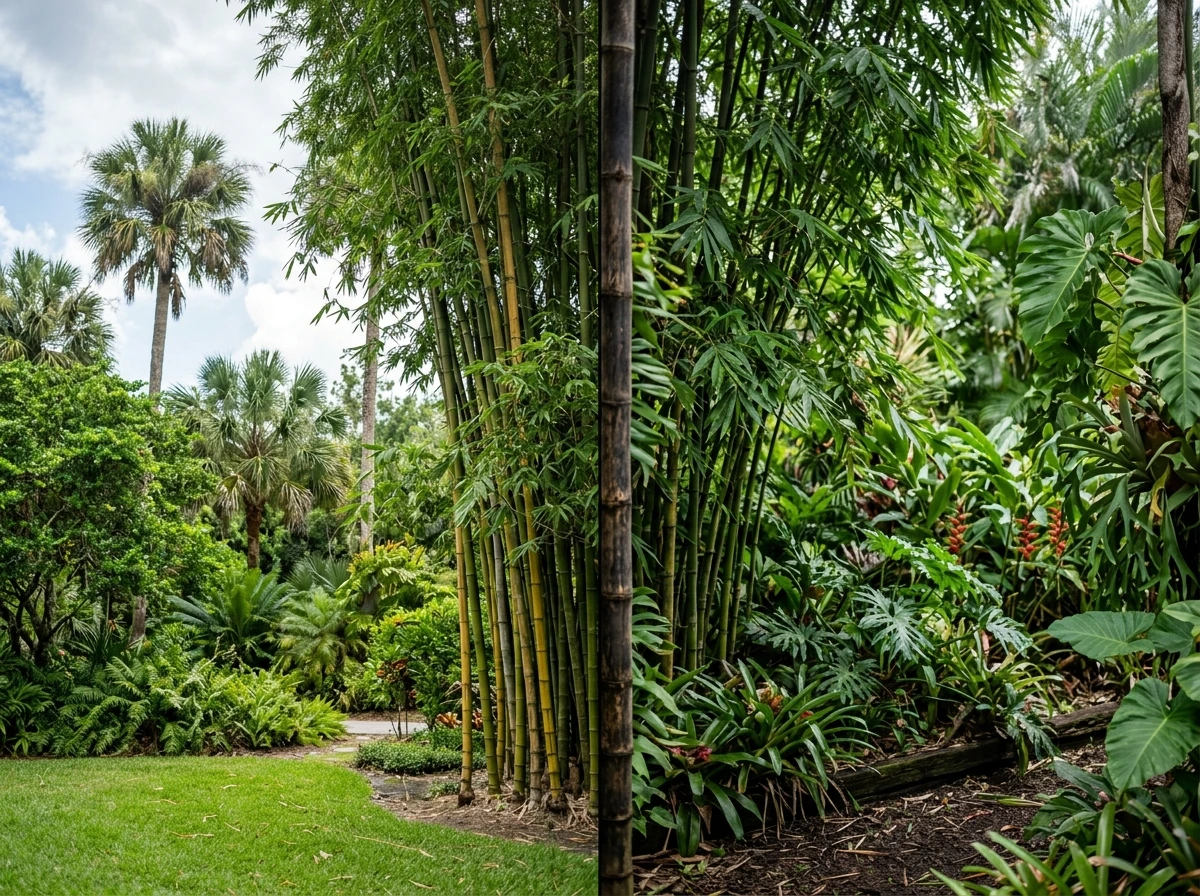
Florida spans two major climate zones that are both excellent for bamboo: the humid subtropical zone covering most of the state (zones 8b through 10a) and the true tropical zone in the southernmost areas including Miami-Dade and the Keys (zone 10b and 11). What this means practically is that south Florida bamboo never really stops growing. Soil temperatures rarely dip below 60°F even in January, and rhizome activity stays elevated year-round. North Florida (Pensacola, Tallahassee, Jacksonville) behaves more like the southeastern US interior, with a genuine winter slow-down when soil temperatures fall toward 50°F and rhizome growth stalls.
Rhizome growth is directly tied to soil temperature. Research from UF/IFAS shows that rhizomes become active around 65 to 70°F and really hit their stride once soil temperatures are consistently above 70°F. In Tampa, Orlando, and points south, that threshold is crossed by March and stays there through November. In Gainesville and Tallahassee, you're looking at a slightly shorter active window, roughly April through October. This is why the same bamboo species planted in Miami versus Tallahassee can show noticeably different annual growth totals, even with identical care.
Seasonality matters for planning. Spring (March through May) is your prime shooting window. This is when most bamboo species push up new culms in a dramatic, fast-paced sprint. Summer keeps the rhizome network expanding underground. Fall is quieter but still productive in south Florida. Winter is the slow period, especially north of Orlando, though it rarely kills established bamboo outright in most of the state.
Clumping vs. running: which one actually grows faster in Florida?
This is the most important choice you'll make, and not just for growth speed. UF/IFAS Extension explicitly states that running bamboo is not recommended for home landscapes in Florida due to containment and invasiveness risks. Palmco, one of Florida's largest bamboo nurseries, echoes this: they advise against planting running bamboo in warm Florida climates without proper root barriers. So for most Florida homeowners, clumping bamboo is the right call both practically and ecologically.
Clumping bamboos (sympodial rhizome structure) expand outward a few inches per year at the base rather than sending rhizomes racing underground in every direction. This makes them manageable and predictable. The tradeoff is that clumpers tend to put more energy into vertical culm growth rather than aggressive lateral spread, which in Florida's climate means you can still get impressive height gains while keeping the plant contained.
If you do plant running bamboo (monopodial rhizome structure) despite the recommendations, you'll need a buried rhizome barrier. Guides recommend burying the barrier to about 28 to 30 inches deep to actually stop rhizome escape. That's a significant installation cost and effort. Most people who try to contain running bamboo without proper barriers regret it within two or three years.
| Type | Spread Habit | Culm Height (common Florida species) | Annual Height Gain (established plant) | Florida Suitability |
|---|---|---|---|---|
| Clumping (Bambusa oldhamii) | Slow, predictable base expansion | Up to 55 ft | 10–20+ ft/year in prime conditions | Excellent, widely recommended |
| Clumping (Bambusa multiplex) | Tight clump, stays compact | 10–25 ft | 5–15 ft/year | Excellent, good for smaller yards |
| Clumping (Dendrocalamus asper) | Moderate base spread | Up to 65 ft | 15–20 ft/year mature | South Florida best, needs heat |
| Running (Phyllostachys aurea) | Aggressive, invasive spread | 20–40 ft | Fast but uncontrollable | Not recommended without barriers |
| Running (Phyllostachys nigra) | Aggressive spread | 20–30 ft | Fast but risky | Not recommended for home landscapes |
For pure speed with manageability, Bambusa oldhamii (giant timber bamboo) is the go-to recommendation in central and south Florida. It's one of the fastest-growing clumpers available, produces large culms, and has proven itself across decades of Florida cultivation. If you want something that won't shade out your neighbors, Bambusa multiplex varieties stay more compact while still growing vigorously in Florida's heat.
The real variables that control how fast your bamboo grows
Sunlight
Most Florida bamboo species perform best in full sun, meaning at least 6 hours of direct sunlight per day. In Florida's intense summer sun, some species tolerate partial shade without major speed penalties, but growth noticeably slows in spots with less than 4 hours of direct light. If you're planting against a north-facing fence or under a large tree canopy, expect growth rates to drop by 30 to 50 percent compared to a full-sun location.
Water and irrigation
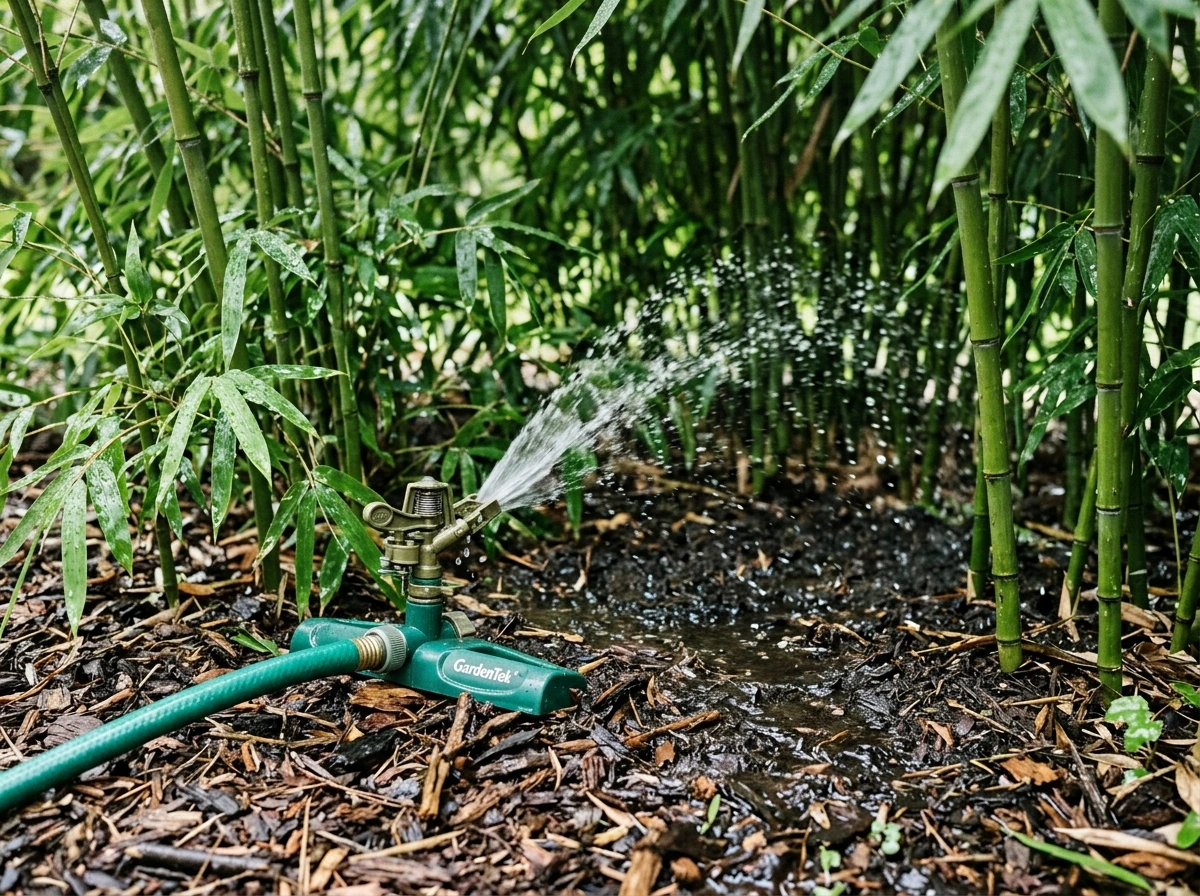
Water is the single biggest lever you can pull in Florida. UF/IFAS research specifically found that more frequent irrigation produces more vigorous bamboo growth, with every-two-day watering in south Florida and every-four-day watering in north Florida associated with notably better results than less frequent schedules. Newly planted bamboo especially needs consistent moisture during the first 6 to 12 months while the rhizome network establishes. Don't rely on Florida's afternoon thunderstorms during the wet season to do all the work: a dry spell in spring, right when new shoots are pushing up, can significantly reduce culm height and diameter that year.
Soil type and drainage
The American Bamboo Society's Florida Caribbean Chapter recommends well-drained, light, sandy soil as the ideal growing medium. Fortunately, this describes a lot of Florida's native soil. What bamboo cannot tolerate is waterlogged roots: standing water for more than a day or two after rain will slow or stall rhizome growth and can cause root rot in severe cases. If your site is in a low-lying area with poor drainage, amend the soil or build up a raised planting mound before you put the bamboo in the ground.
Fertilizer
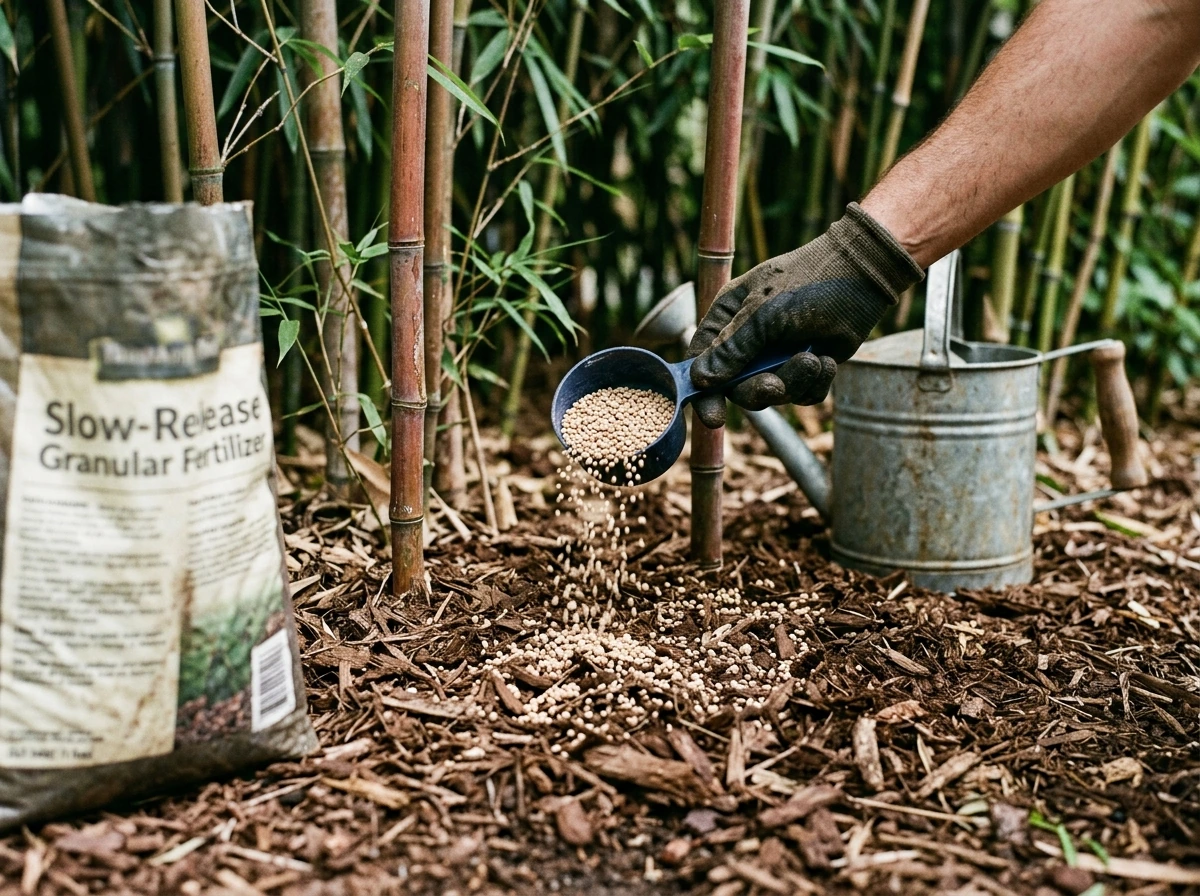
UF/IFAS Extension recommends a slow-release fertilizer that is low in phosphorus with roughly equal parts nitrogen and potassium, such as an 18-6-12 formula, applied twice per year. You can apply it on top of the root ball, backfill soil, or directly on top of the mulch at planting. High-nitrogen fertilizers applied in spring, just before the main shooting season, give the plant the fuel it needs to push up larger, taller culms. Avoid over-fertilizing with phosphorus, which can actually throw off root development without adding growth speed.
Mulch
Mulch is underrated for bamboo. It keeps soil moisture consistent, moderates soil temperature, and feeds the rhizome zone as it breaks down. UF/IFAS Gardening Solutions recommends no more than 3 inches of mulch, because deeper applications can actually divert water away from the root system rather than delivering it. A 2 to 3 inch layer of wood chip or pine bark mulch spread out to the drip line of the plant is the sweet spot.
Temperature and wind
Florida's winter cold snaps, even brief ones, can set back north Florida bamboo. A hard freeze (below 28°F for more than a few hours) can kill the above-ground culms of more tropical species, though established root systems usually survive and resprout. Wind is less discussed but worth considering: coastal Florida sites with persistent strong winds can stress bamboo and slow growth, particularly for taller species that get top-heavy. A windbreak or sheltered microclimate helps significantly in exposed coastal locations.
Planting for fastest establishment: what to do from day one
The best time to plant bamboo in Florida is spring, once soil temperatures are consistently above 70°F. In south Florida, this can mean as early as February or March. In north Florida, late March through April is safer. Planting in the warm season gives the rhizome network the maximum amount of time to expand before the first cool-down, which translates directly into more and larger culms the following spring.
- Choose a full-sun location with well-drained soil. If drainage is poor, build up the planting area by 6 to 12 inches with amended soil.
- Dig a hole twice as wide as the root ball but no deeper. Bamboo rhizomes spread laterally, not downward.
- Backfill with native soil mixed with compost at roughly a 3: 1 ratio. Don't overamend with heavy organic matter that holds too much moisture.
- Apply slow-release 18-6-12 fertilizer on top of the backfill or mulch at planting.
- Water deeply at planting, then maintain an every-2-day schedule in south Florida or every-4-day schedule in north Florida for the first season.
- Apply 2 to 3 inches of mulch over the root zone, keeping it a few inches away from the culm base to avoid rot.
- Avoid pruning or cutting during the first year. Every leaf the plant can produce feeds the rhizome network.
Transplant shock is real and unavoidable to some degree. A bamboo that looked vigorous at the nursery will often sit quietly for four to eight weeks after planting before showing any visible new growth. This is normal. The plant is pushing energy into root and rhizome establishment, not visible top growth. Resist the urge to add more fertilizer or move the plant during this period.
Month-by-month: what to actually expect in year one
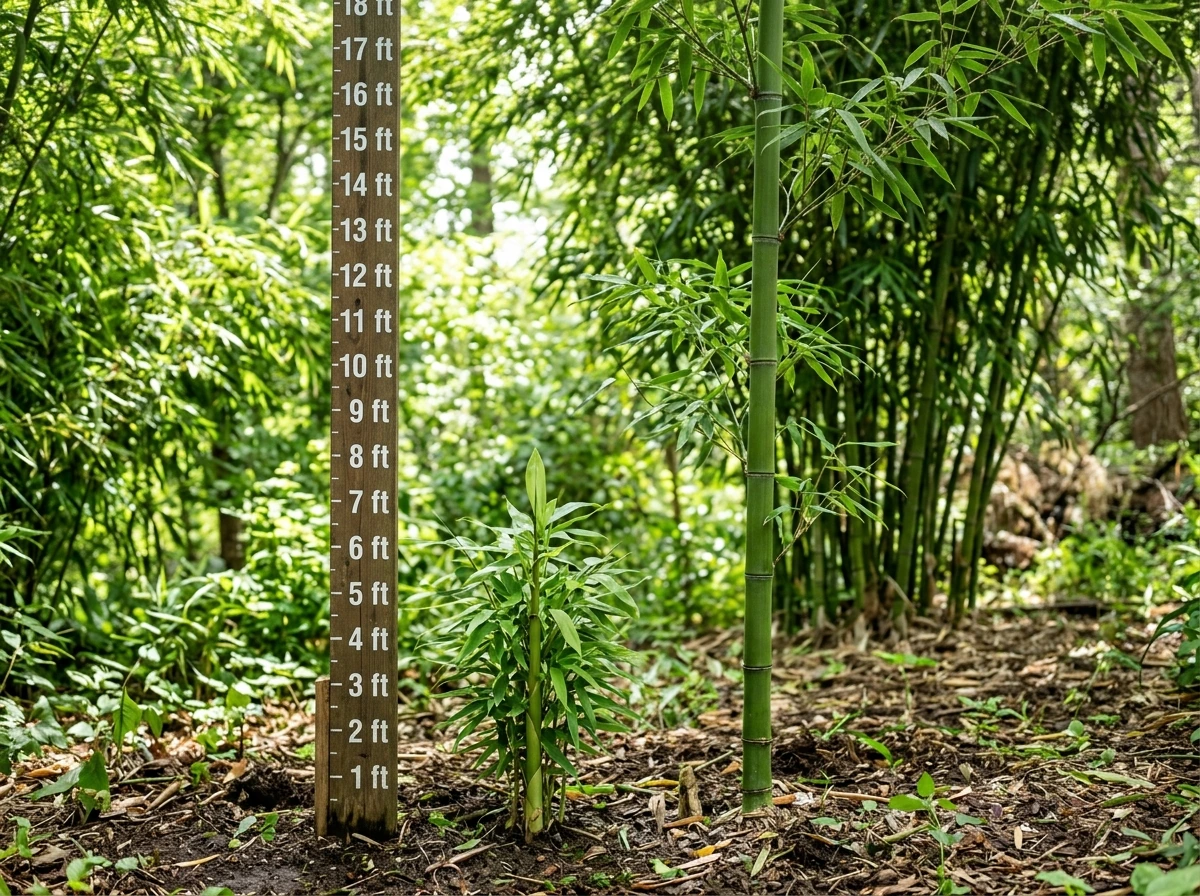
Here's an honest timeline for a clumping bamboo (like Bambusa oldhamii) planted in spring in central Florida. Results will vary based on plant size at purchase, soil prep, and irrigation consistency.
| Timeframe | What's Happening | Visible Progress |
|---|---|---|
| Months 1–2 | Transplant adjustment, root establishment | Little to no visible top growth; possible leaf drop initially |
| Month 3 | Rhizome network beginning to expand; first signs of life | Possible small shoots or new leaf flush on existing culms |
| Months 4–5 (peak season) | Active shooting period; culm height growth sprint | New culms pushing up 6 inches to 1+ foot per day at peak; dramatic visible change |
| Month 6 | Culms reach near-final height; leaves fully expanding | Plant may be 5–15 ft taller than at planting depending on species and conditions |
| Months 7–9 | Underground rhizome expansion; slower top growth | Clump base widening slightly; existing culms leafing out fully |
| Months 10–12 | Growth slows in north FL; continues in south FL | North FL: dormancy approaching. South FL: possible secondary shoot flush |
The explosive growth phase that gives bamboo its reputation happens during that 4 to 8 week shooting window in spring. Florida Bamboo & Fruit Trees describes this accurately: new shoots can gain a foot or more per day at their peak. The claim from Palmco that some varieties can grow up to 2 inches per hour in optimal weather is at the extreme end, but it reflects what you can actually observe during a warm, wet Florida spring on a healthy, well-established plant. The key word there is established. A plant in its first year will not hit those rates. By year three, a well-cared-for clumping bamboo in central or south Florida routinely sends up culms 10 to 15 feet taller than the previous year's growth, which is the benchmark Florida Bamboo & Fruit Trees uses as a typical annual progression.
Slow growth? Here's how to diagnose and fix it
If your bamboo isn't performing the way you expected, it usually comes down to a handful of culprits. Here's how to work through them.
- Yellow leaves on older culms: Often a nitrogen deficiency or waterlogged roots. Check drainage first. If drainage is fine, apply a light dose of balanced slow-release fertilizer.
- No new shoots after 3+ months: The plant may still be in transplant recovery, especially if planted in fall or winter. Increase irrigation frequency and confirm soil temperatures are above 65°F. Patience is usually the answer here.
- Shoots emerge but stay short and thin: Usually a water or fertility issue during the shooting window. Thin culms mean the rhizome didn't have enough stored energy at shoot time. Improve irrigation consistency and fertilize in late winter before the shooting season.
- Leaves curling or rolling inward: This is a drought stress response. Florida's dry season (November through April) combined with infrequent irrigation is the most common cause. Increase watering immediately.
- New growth burns or browns at the tips: Could be fertilizer burn (too much, too close to the base) or wind desiccation on exposed sites. Pull mulch back and check for salt buildup from over-fertilizing. Add a windbreak if the site is coastal.
- Clump not spreading or expanding after year two: Check whether the planting site is too shaded. Also confirm you're using the right fertilizer ratio. Excess phosphorus relative to nitrogen can limit vegetative growth.
- Entire plant looking stunted with dark or mushy roots: Root rot from poor drainage. This is serious. You may need to transplant to a better-draining site and trim any rotted roots before replanting.
One thing worth saying directly: bamboo in Florida is remarkably resilient once established. Most slow-growth problems are fixable with water and time. The mistakes that are harder to undo are planting in genuinely bad drainage (fix this before planting, not after) and choosing a species that's not suited to your specific zone. A tropical Dendrocalamus in Tallahassee is going to struggle no matter what you do in February.
Indoor and container growing: the honest limits
Container bamboo and indoor bamboo are popular in Florida, but they grow significantly slower than in-ground plants. The reason is root volume. Bamboo's growth rate scales with rhizome network size, and a container hard-limits how far rhizomes can extend. A 15-gallon container might give you a respectable clumper that stays 6 to 10 feet tall, but it won't approach the 20 to 40-foot growth potential of the same species in the ground.
For container growing in Florida, the practical guidance is to size up your container as the plant matures, repot every two to three years before the plant becomes root-bound, and use a mix that drains freely (a sandy loam base works well, consistent with what bamboo prefers in the ground). Container plants dry out faster than in-ground plants, especially in Florida's summer heat, so you'll likely need daily watering during the hottest months. Fertilize container bamboo at the same 18-6-12 slow-release formula but at half the labeled rate, since salts concentrate faster in pots.
Truly indoor bamboo growing in Florida is mostly impractical for timber or large clumping species. Low-light interiors severely limit growth speed, and without the outdoor temperature swings and seasonal cues, many bamboo species lose their natural shooting rhythm. Lucky bamboo (Dracaena sanderiana) is what most people are actually keeping indoors, and it's not a true bamboo at all. If you want bamboo indoors, a bright sunroom or covered lanai that gets several hours of direct or very bright indirect light is your best bet, and even then, manage expectations: you're looking at slow, incremental growth compared to outdoor performance.
The bottom line for Florida growers is that in-ground, full-sun clumping bamboo in the right zone is as fast and rewarding as anywhere in the country. Match the species to your climate zone, get irrigation right from day one, fertilize twice a year, and mulch consistently. Do those four things and you'll watch your bamboo grow faster than you thought plants were allowed to grow.
FAQ
Why did my bamboo not grow fast right after planting in Florida?
If you buy bamboo from a nursery and plant it in Florida, the “fast growth” you hear about usually starts after the plant rebuilds its rhizome network. It commonly sits with little to no visible height for about 4 to 8 weeks, then begins shooting in spring, so your best yardstick is new culms and rhizome vigor, not early top growth.
How can I tell if my bamboo is actually growing fast, not just during a brief burst?
Most fast-looking growth happens only during active shooting, so a quick per-day culm gain in spring can translate into very different results by month. Measure on a consistent scale (for example, culm height and number of new culms every 4 weeks) rather than comparing random “peak” days to later months.
Why does my bamboo grow well in summer but slow down in winter in Florida?
Bamboo growth slows when soil temperatures drop, even if the air feels warm. In north Florida, expect a more noticeable winter slowdown than in central and south Florida because rhizome activity stalls when soil temperatures fall toward the low 50s Fahrenheit.
Can I get the same fast growth in a container in Florida?
Yes, but containers change the outcome. Root restriction limits the rhizome network size, so even with good care, in-ground growth rates are usually far higher than container growth rates. If you want the fastest performance, plan for in-ground planting or accept smaller mature heights in a pot.
Does partial shade slow bamboo growth as much as people say in Florida?
Full sun matters most when you are trying to maximize the speed of culm production. In Florida, spots with less than about 4 hours of direct sun often show slower shooting and smaller culms, so shifting the plant to a sunnier area (or trimming nearby shade sources) can improve growth even without changing species.
What watering mistake most often reduces how fast bamboo grows in Florida?
For irrigation, consistency beats “soak less often.” Newly planted bamboo generally needs steady moisture through the first 6 to 12 months, and dry spells right when shoots are trying to emerge can reduce both the number of shoots and their final culm size.
What should I do if my yard floods or stays soggy after rain?
Bamboo can be harmed by standing water. If the site stays waterlogged for more than a day or two after rain, rhizomes slow and root problems become more likely. For low areas, a raised mound or soil amendment before planting is the difference between fast growth and chronic stalling.
Is more fertilizer always better for making bamboo grow faster in Florida?
Over-fertilizing with phosphorus can backfire by harming root development, even if the plant looks greener briefly. Stick to a low-phosphorus, balanced nitrogen and potassium slow-release plan (about twice per year), and avoid “high nitrogen only” strategies that push soft growth without healthy rhizome establishment.
How thick should I mulch bamboo in Florida to help it grow faster?
Mulch affects speed indirectly by stabilizing moisture and soil temperature, but too much can reduce water delivery at the rhizome zone. Keep mulch around 2 to 3 inches (not deeper) and spread it to the drip line, so the plant keeps getting consistent moisture instead of staying overly wet or poorly aerated.
Will a Florida cold snap kill my bamboo, or will it come back quickly?
Freezing events can damage above-ground culms, but the regrowth outcome depends on how cold it gets and how long, plus the bamboo’s tropical tolerance. If you get a hard freeze for multiple hours, expect top dieback on more tropical species, then resprouting later if roots survive.
Does wind affect how fast bamboo grows in Florida, and what can I do about it?
Wind can slow growth by increasing stress and top-heavy motion, especially for taller, fast-growing clumping species. If your site is coastal or very exposed, adding a windbreak or moving the clump to a sheltered microclimate can help maintain the shooting rhythm.
What’s the quickest bamboo option that still stays manageable for most Florida homeowners?
If you need the fastest growth you can manage safely, choose clumping bamboo matched to your zone and plant in spring after soil temperatures stay warm. For many Florida gardeners, a practical “fast yet manageable” choice is a vigorous clumping timber-type bamboo in central and south Florida, while staying conservative about cold tolerance in north Florida.
Next Article
How Fast Does Bamboo Grow in Texas? Growth Rates
See realistic Texas bamboo growth timelines, factors that speed growth, and care tips for fast establishment and spread.