Balsa wood grows naturally in the humid lowland tropics of the Americas, from southern Mexico down through Central America and into the northern and western parts of South America, including Venezuela, Colombia, Ecuador, Peru, Bolivia, and Brazil. It also occurs in parts of the West Indies. Outside that native range, it has been successfully planted in tropical regions like Papua New Guinea and the Philippines, but only where the climate closely mirrors those humid lowland conditions. If you live somewhere with cold winters, dry summers, or unpredictable frosts, growing balsa outdoors is not realistic.
Where Does Balsa Wood Grow and How to Grow It
Marcus Hartwell
24 Mar 2026
What tree does balsa wood actually come from?
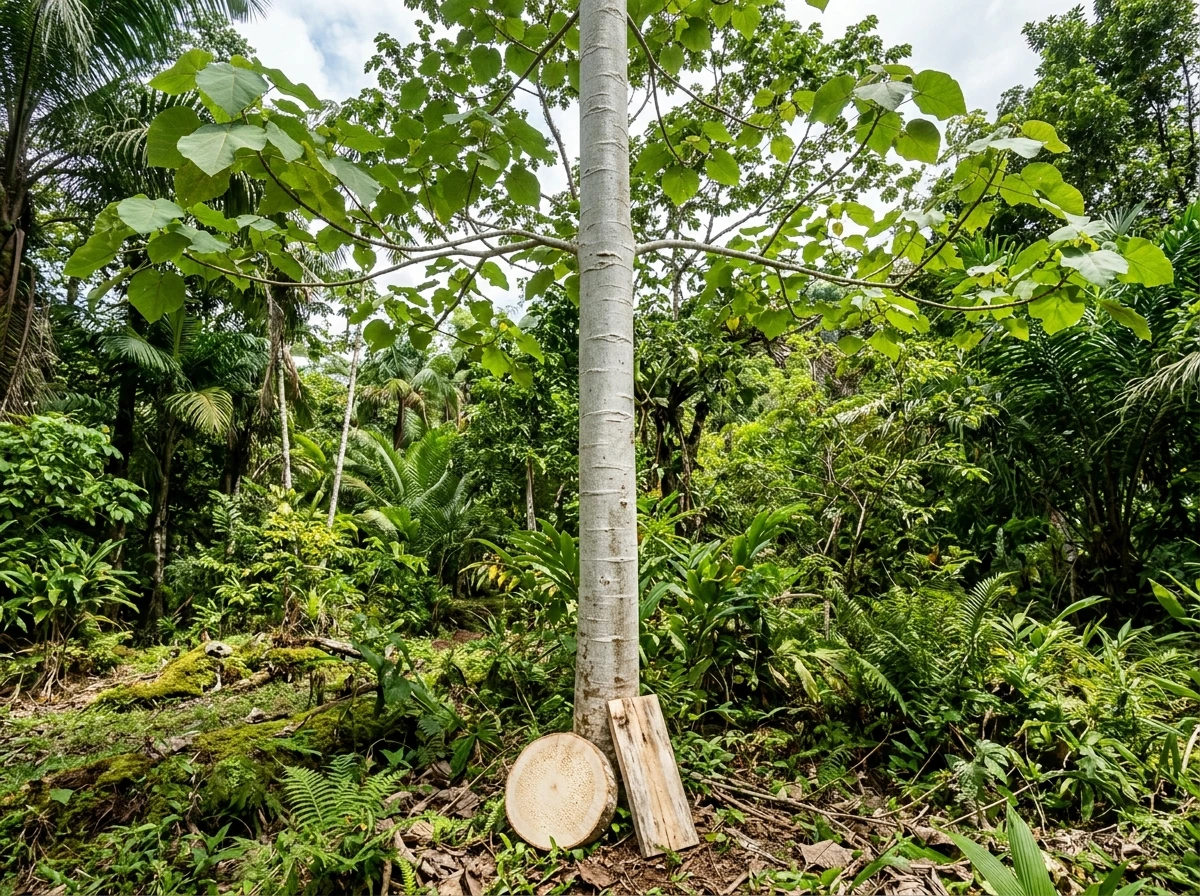
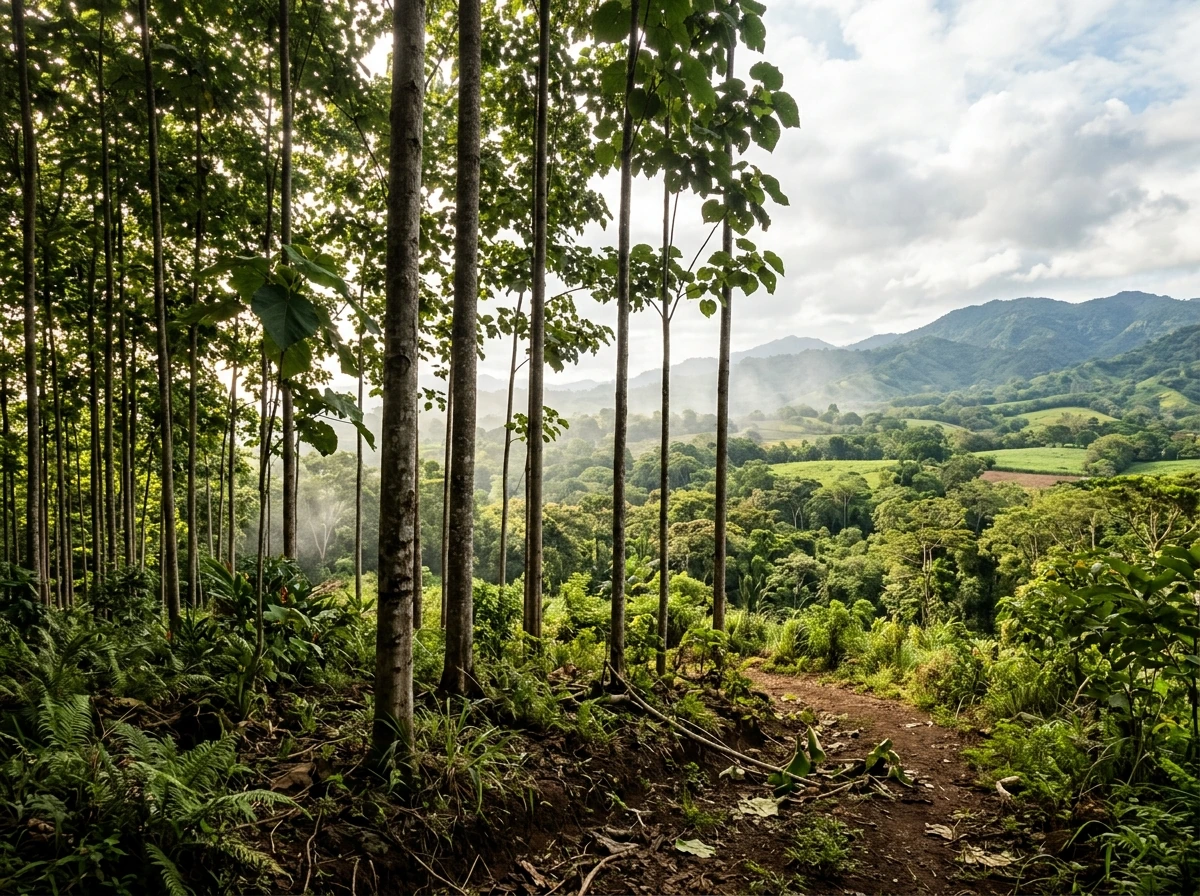
Balsa comes from a single species: Ochroma pyramidale (Cav. ex Lam.) Urb., accepted under that name by Kew's Plants of the World Online database and the standard used in forestry and botanical literature globally. It belongs to the family Malvaceae, the same broad family as hibiscus and cotton, which surprises most people who think of it as more of a timber tree. It is the only species in the genus Ochroma, so there are no closely related 'cousins' to substitute. When you hear 'balsa' in any commercial or hobbyist context, it is always this one species.
The tree is famous for producing the lightest commercial wood in the world, and that low density is directly tied to how fast it grows. Balsa is a true pioneer species, meaning it is one of the first trees to colonize disturbed ground after forest clearance or fire. It grows explosively in full sun, produces large, soft-walled cells quickly, and that cellular structure is exactly what makes the wood so light. Slow it down with shade, and the wood gets denser and heavier. Understanding that growth strategy is key to understanding where and how it thrives.
Where balsa grows naturally in the world
The USDA Forest Service describes the native distribution as spanning the West Indies and a broad swath of tropical America: The USDA Forest Service describes the native distribution as spanning the West Indies and a broad swath of tropical America: from southern Mexico through Guatemala, Belize, Honduras, Nicaragua, Costa Rica, and Panama, and then continuing into the northern and Andean parts of South America through Venezuela, Colombia, Ecuador, Peru, Bolivia, and parts of Brazil., and then continuing into the northern and Andean parts of South America through Venezuela, Colombia, Ecuador, Peru, Bolivia, and parts of Brazil. That is a large range, but it shares a common thread: warm, humid, low-elevation tropical conditions. You generally find balsa below about 1,000 meters elevation, where temperatures stay high year-round and rainfall is substantial.
Within that range, balsa is not a deep-forest canopy tree. It shows up heavily in disturbed areas, forest edges, secondary growth after land clearing, and in some seasonally flooded forest types (várzea-style habitats in Amazonian contexts). It is an opportunist that needs high light to establish, so intact closed-canopy old-growth forest is actually not its preferred habitat. That is a useful thing to know if you are thinking about site selection for cultivation: balsa wants open ground, not forest shade.
Outside the Americas, balsa has been planted successfully in tropical zones that match its climate requirements, most notably in Papua New Guinea, which is now one of the world's significant balsa producers, and in parts of the Philippines, particularly Mindanao. These plantation successes reinforce that the species is not geographically restricted to Latin America specifically, but it is absolutely restricted to tropical climate conditions.
Climate requirements: temperature, rainfall, and humidity
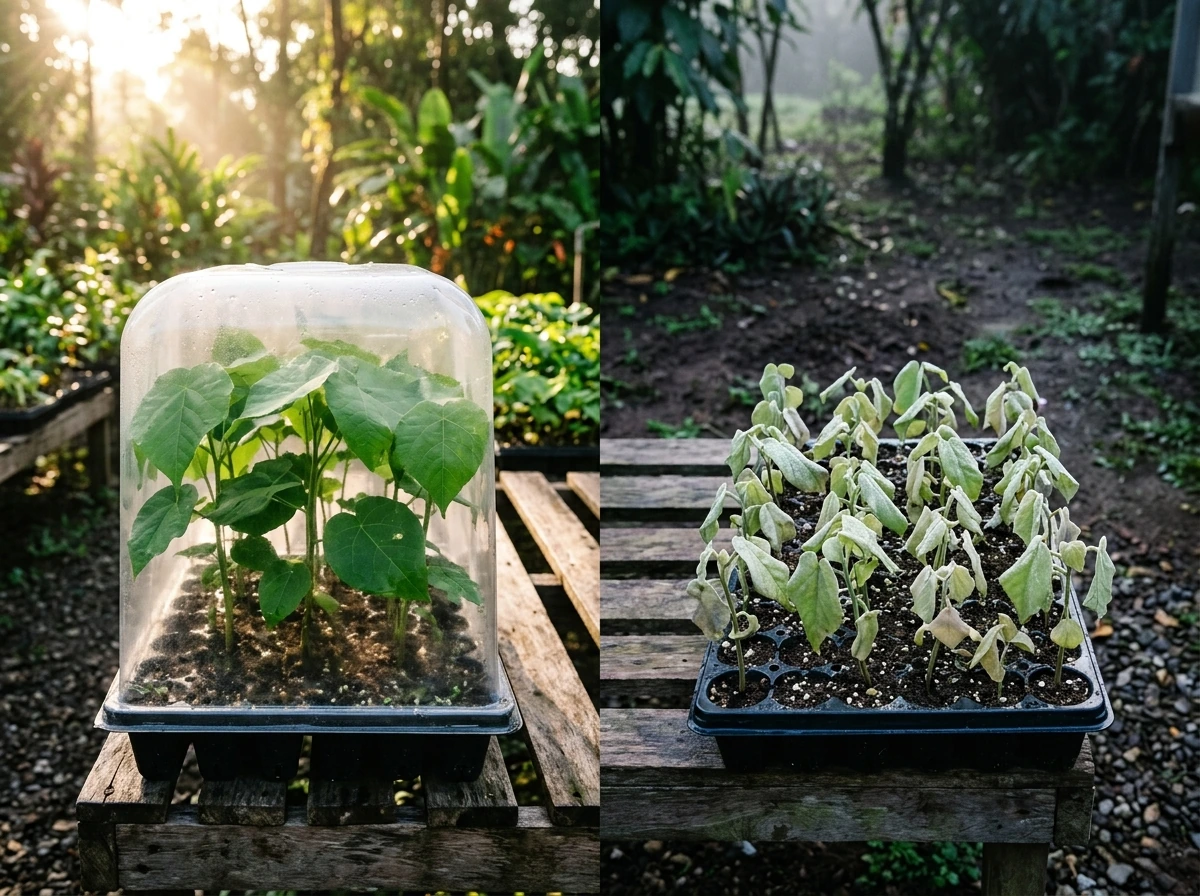
Balsa is not frost tolerant, full stop. Even a light frost will damage or kill a young tree, and repeated cold events will finish it off entirely. The ACIAR research on balsa production in Papua New Guinea frames the species as suited to warm lowland tropical conditions, and that framing holds across all the forestry literature. If your location sees winter temperatures dropping below freezing, outdoor balsa cultivation is off the table.
On the rainfall side, Cirad's species account puts the annual precipitation requirement at roughly 1,500 to 3,000 mm per year. To put that in perspective, that is 59 to 118 inches of rain annually. Most of the continental United States receives between 15 and 60 inches per year. Even the wetter parts of the Gulf Coast or Pacific Northwest fall short of the lower end of that range, and they also have cold winters. Humidity matters too: balsa is a humid-tropics tree, and prolonged dry spells during establishment stress or kill young trees.
The FAO EcoCrop suitability model for Ochroma pyramidale reinforces these thresholds as hard constraints rather than preferences. When local minimum temperatures or annual rainfall seasonality fall outside that modeled band, establishment risk jumps sharply. It is the same logic I use when comparing bamboo in coastal Japan versus bamboo in West Texas: the climate envelope is the first filter, and if you fail it, soil and sunlight details become irrelevant.
Soil, sunlight, and site conditions
For soil, the USDA Forest Service guidance is clear: balsa makes its best growth in loamy soils. Good drainage is important, and the FAO EcoCrop data for the species emphasizes well-drained conditions as a key descriptor. Waterlogged soil is not ideal for establishment, even though balsa does occur in seasonally flooded forest contexts in the wild. The distinction there is seasonal flooding versus permanent saturation: balsa can handle periodic wet conditions but does not do well sitting in standing water consistently.
Soil pH should be in a workable mid-range. The FAO EcoCrop profile shows the species tolerating a reasonable band typical of tropical and subtropical soils, roughly pH 5 to 7, which covers most loamy tropical garden soils without special amendment. If your soil is highly alkaline or heavily compacted clay with poor drainage, those are problems worth fixing before planting.
Sunlight is non-negotiable: balsa demands full sun, particularly during establishment. The USDA's tech sheet notes directly that shade slows growth and results in denser, heavier wood. Since the defining value of balsa is its light weight (which comes from fast growth in high light), planting it in partial shade defeats the purpose and compromises the tree's vigor. Choose an open site with no canopy competition.
How balsa grows: from seedling to harvest
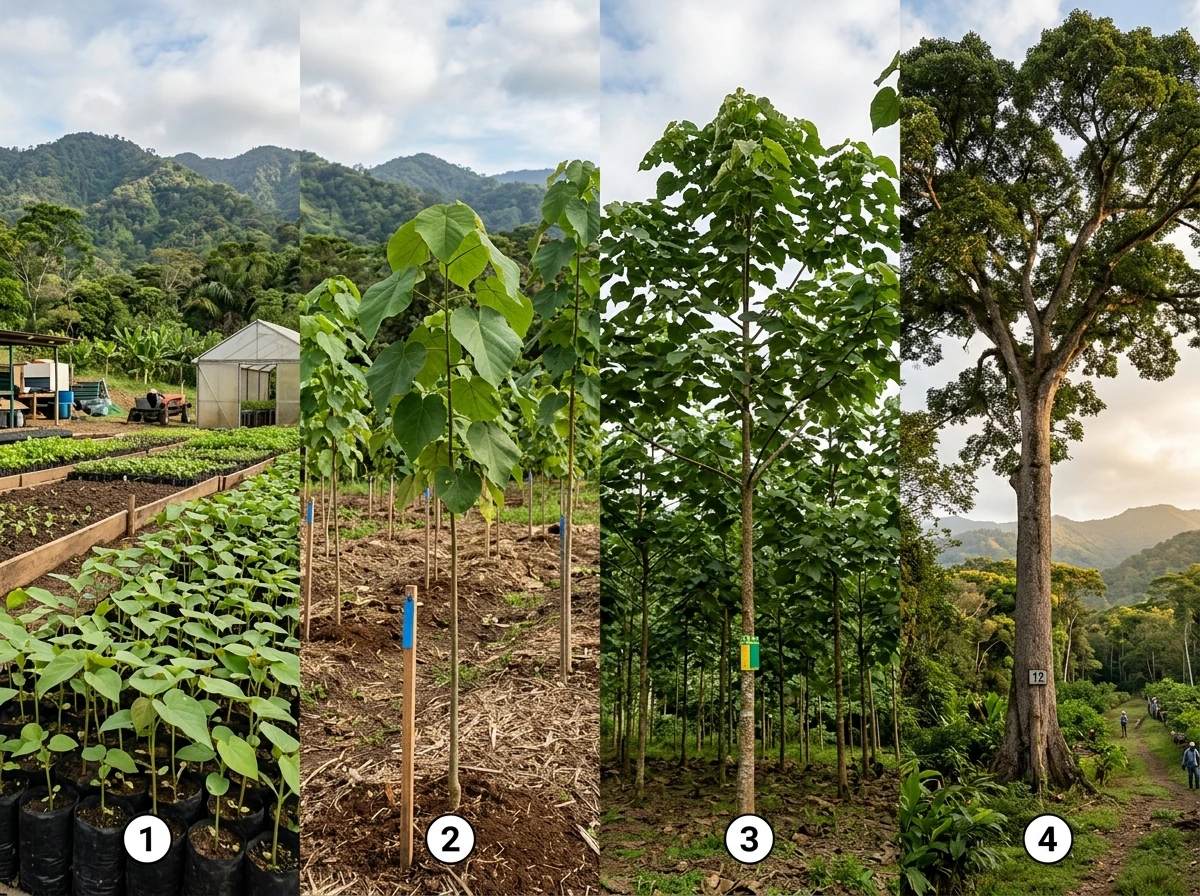
Balsa's growth rate is genuinely extraordinary under the right conditions. The USDA Forest Service reports that on the best sites, balsa can reach roughly 80 feet tall and about 2.5 feet in diameter in approximately 5 years. That is not a typo. For comparison, most commercial timber species take several decades to reach harvestable size. This speed is what makes balsa economically interesting for plantation forestry and what makes it a classic example of a fast-growing pioneer tree, comparable in growth-rate conversation to bamboo but in a completely different plant category.
Flowering typically begins around 3 to 4 years of age, according to Britannica, which describes flowers that open at night and are pollinated primarily by bats. The fruit is a capsule packed with many small seeds bearing long silky hairs that allow wind dispersal over considerable distances. That dispersal mechanism is part of why balsa colonizes disturbed sites so readily in its native range.
In plantation settings, the ACIAR report on balsa production in Papua New Guinea outlines a multi-year management timeline that includes establishment, early weeding to reduce competition, thinning, pruning, and eventual harvest. A typical managed rotation runs roughly 5 to 7 years depending on site quality, target wood density, and market specifications. Plantation operations involve multiple interventions across those years, and the timeline is tighter than almost any other commercial timber species. For a home grower in a suitable climate, the practical takeaway is that you are looking at a tree that, if it survives establishment, will grow visibly fast, be harvestable within a decade at most, and reward good site selection very quickly.
Balsa vs. bamboo: a quick comparison for context
Since this site focuses primarily on bamboo, it is worth briefly comparing how balsa and bamboo differ in terms of where they can be grown. Both are famous for fast growth, but their climate tolerances are quite different, and bamboo is far more geographically flexible.
| Characteristic | Balsa (Ochroma pyramidale) | Bamboo (various species) |
|---|---|---|
| Native range | Tropical Americas, West Indies | Asia, Americas, Africa, parts of Europe |
| Frost tolerance | None — even light frost is damaging | Varies widely; some species tolerate -20°C |
| Annual rainfall needed | 1,500–3,000 mm (59–118 in) | Varies; many species manage on 800–2,500 mm |
| Sunlight requirement | Full sun only | Full sun to partial shade depending on species |
| Preferred soil | Loamy, well-drained, pH ~5–7 | Wide tolerance; most well-drained soils |
| Time to maturity/harvest | ~5–7 years in plantation | 3–5 years for culm harvest in good conditions |
| Climate adaptability | Narrow (humid tropics only) | Wide (tropical to temperate zones) |
The core takeaway from that comparison: if you are in a temperate climate and interested in a fast-growing, useful plant, bamboo offers far more species options suited to where you actually live. Balsa requires conditions that most people outside the humid tropics simply cannot replicate outdoors.
Can you grow balsa where you live?
Here is a practical suitability check based on what the research actually says. Work through these questions honestly before investing in seeds or seedlings.
- Does your location stay frost-free year-round? If your area sees any freezing temperatures in winter, outdoor balsa will not survive. This rules out most of the continental United States, all of Canada, Europe outside the Canary Islands, and most of temperate Asia.
- Does your area receive at least 1,500 mm (about 59 inches) of annual rainfall, reasonably well distributed across the year? If your annual rainfall is significantly below that, or concentrated in a short wet season with a long dry period, establishment will be very difficult without intensive irrigation.
- Can you provide a full-sun, open site with loamy, well-drained soil? Shaded spots or heavy clay will underperform significantly.
- Are you in USDA Hardiness Zone 12 or higher (or a local equivalent indicating consistently warm, frost-free lowland tropics)? If yes, outdoor planting is worth attempting. If you are in Zone 10 or 11, occasional cold events create serious risk.
- If you cannot meet the outdoor conditions, is a large greenhouse or indoor growing space realistic? Balsa can be grown as a container tree in a warm greenhouse, but it grows fast and needs significant space and light — a small windowsill is not going to work.
If you are in a suitable tropical climate
If you are in southern Florida, Hawaii, Puerto Rico, tropical Queensland in Australia, coastal Papua New Guinea, the Philippines, or anywhere else with genuine humid tropical conditions, balsa is a realistic and genuinely rewarding tree to grow. Source seeds from a reputable supplier, start in a sunny open site with well-drained loamy soil, manage weeds aggressively in the first year (competition at ground level will slow establishment significantly), and expect dramatic visible growth within the first two to three years. By year five on a good site you will have a substantial tree.
If you are in a subtropical or marginal climate
Subtropical regions, think coastal areas at the edge of the tropics with mild winters and summer rainfall, may be marginal for balsa. An isolated cold snap can kill young trees entirely, and rainfall is often below the optimal range. If you want to try it anyway, start trees in containers so you can bring them indoors during any cold period, choose the warmest and most sheltered microclimate on your property, and treat it as an experiment rather than a sure thing. Be honest with yourself about the rainfall deficit: if you are relying on irrigation to substitute for 40 inches of missing annual rainfall, the cost and effort may not be worth it.
If you are in a temperate climate
Outdoor balsa cultivation in a temperate climate is not viable. If you are genuinely curious about the tree, a heated greenhouse set to mimic tropical conditions (minimum night temperatures above 15°C, high humidity, very bright light) can sustain a balsa tree as a novelty or educational plant. But do not expect plantation-style growth or harvestable wood from a greenhouse specimen in a temperate zone. For fast-growing, useful plants suited to temperate climates, bamboo is the far more practical choice. There are bamboo species suited to almost every temperate and subtropical climate, and the resources on this site can help you answer "where do bamboo trees grow" and match the right species to your specific conditions. where does bamboo grow in the world
FAQ
Can balsa grow outside the tropics if I use a greenhouse or hot house year-round?
It can stay alive in a greenhouse, but you usually will not get plantation-level growth unless you actively maintain tropical-like nights (minimums above about 15°C), very high humidity, and intense, continuous light. If your greenhouse relies on dim winter sun or cool nights, growth will stall and the wood density will not match what you expect from true lowland tropical conditions.
What’s the biggest “make or break” factor, climate or soil?
Climate is the first filter. Even perfect loamy, well-drained soil will not compensate for cold events or long dry seasons during establishment. Soil matters after you pass the temperature, rainfall, and humidity thresholds, especially drainage and periodic wet versus permanently waterlogged conditions.
Does balsa tolerate seasonal flooding if the ground drains when it dries out?
Yes, it can handle periodic flooding because it evolved in seasonally flooded habitats, but it still needs aerated conditions overall. If the site becomes permanently saturated, seedlings often fail due to oxygen stress and root rot risk. A practical check is whether the soil visibly dries down between wet periods.
How can I tell whether my microclimate is warm and humid enough if my region is “borderline”?
Use minimum temperature and dry spell planning, not averages. Track night lows (especially during the first year) and watch how long it stays dry. For borderline coastal subtropics, containerizing gives you control during a cold snap, but you still need to manage establishment-level drought with humidity support or irrigation.
Why do some people say balsa grows fast but their trees end up smaller and heavier?
Shade and slow growth are the main drivers. When balsa establishment happens in partial shade, its growth rate drops and the wood becomes denser. Another common mistake is letting weeds compete during the first year, which reduces early vigor and delays the fast, light-wood growth pattern.
Can I start balsa from seed, or is it better to buy seedlings?
Either can work in suitable climates, but seeds require careful early conditions because the tree is not frost tolerant and seedlings are vulnerable to dry spells. If your goal is to plant outdoors, buying healthy seedlings can reduce the risk window, but you still must plant into full sun with well-drained soil and strong weed control right away.
What soil pH range is acceptable, and do I need to amend it?
A workable mid-range pH is typical (roughly pH 5 to 7). You might only need amendments if your soil is strongly alkaline or very compacted clay that stays wet. If drainage is poor, fixing drainage (raised beds, soil structure improvement) is usually more effective than pH-only adjustments.
How much rain is “enough,” and does irrigation count if my rainfall is lower?
Irrigation can help during establishment, but it is not a perfect substitute if your climate has both a rainfall deficit and cooler nights. If your area regularly misses the high annual precipitation band and also has occasional cold snaps, irrigation costs and risk usually outweigh the chance of getting good growth. If only part of the year is dry, targeted irrigation during establishment is more realistic.
How far below 1,000 meters elevation can balsa still grow?
Balsa is most reliable below roughly 1,000 meters because temperatures stay warmer year-round. In higher elevations, even if the rainfall is right, cooler nights and occasional frost become the deciding factor. The practical approach is to base your plan on local minimum temperatures, not elevation alone.
Is the wood from homegrown balsa guaranteed to be the same lightness as commercial balsa?
Not guaranteed. Lightness depends on rapid growth under full sun, early vigor, and the resulting wood structure. Slower growth from shade, weed competition, drought stress, or suboptimal humidity can lead to denser wood, so if you care about weight, prioritize light and early-care conditions over everything else.
Next Article
How Fast Does Bamboo Grow in Florida? Growth Rates by Species
Florida bamboo growth timelines by species, inches per month, and tips to speed establishment and prevent stalling.